You cannot fire a community
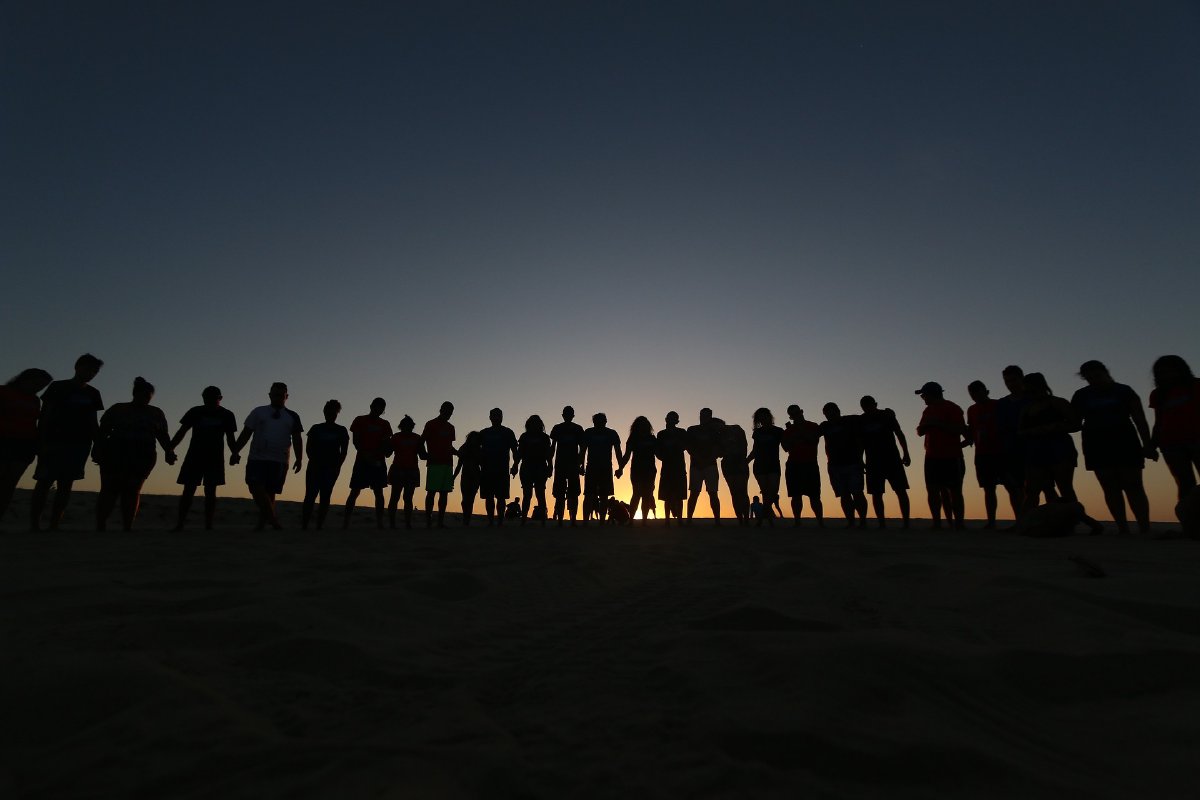
What makes a community?
I have never really tried to define what makes a community. Apparently its a shared characteristic. It can be locality, experience, area of focus. If there’s a reason to connect between a group of people and they connect - there: community.
It’s funny because I’ve been saying the word so many times and usually I would talk about what describes the community, but not what constitutes it. Support, impact, belonging, curiosity - it’s something we find in the community, but not what makes it.
You can find a community, or a community can find you
I’m not sure if the shared characteristic and the purpose are the same thing or something independent. It feels like there is some distinction and also it might be that either of those can change. The characteristic would be to me: over what would we connect? The purpose: what do we want to do with the connection? This might be wrong, but for now describes it best in my head.
The amazing thing about a shared purpose is that you can be alongside each other and contribute, and whatever way you show up is the best way. Some will be your talent, some will be your effort, and it might be big or tiny, but will add value regardless, and the community will build on that. It can be a one-off or a long-term commitment.
Communities have the power to find the tails of the distribution, the outliers, and make space for them right in the centre. Organisations have external forces that push them, whether it is sellability, profit or whatever else makes the shareholders happy. They focus on the middle because that’s where they can make the biggest shift. But then the mean is a large mass, and the bigger the organisation the higher the inertia that counters that change.
Communities are different. They have the power of doing things because they are worth doing, and the worth can be measured in impact, togetherness, feel good, learning, fun or whatever floats your boat. The motivation will always be intrinsic, and coming from the doers. If a shift has to happen, it just happens as a cumulation of individual efforts that change the direction.
Organisations + communities
There’s something interesting about communities and organisations in that they can form a symbiotic relationship of sorts. While neither really needs the other to exist, such aliance brings benefits to both sides.
If you produce a shared characteristic or purpose for people to gather around, it just needs a spark to ignite a community, and then if you acknowledge, appreciate and support it, the community will grow. It may be a fully open organic growth, or exclusive one, application-based or invite-only.
My experience: AWS DeepRacer
Lyndon Leggate wanted to gather the participants of the AWS Summit in London, but it quickly outgrew the initial need to share the excitement and the local aspect. Many themes emerged:
- there was a need for technical support which you would not get out of AWS without paying extra. The community stepped up,
- then came the costs - DeepRacer was costing quite a bit at first. Enter DeepRacer local which evolved into DeepRacer for the Cloud and Deepracer on the Spot,
- then the racing got harder - we quickly formed a relationship where the best ones supported the struggling ones and got better in the process,
AWS have acknowledged and supported the community. We have learned to expect and work around the flops among the great changes and genuine effort, and AWS have learned to listen, ask for and accept support and appreciate us on the good days and the grumpy days. And there many.
Most importantly, there were amazing professionals who understood the often intangible and unpredictable force in the community. We mutually and patiently built and rebuilt trust with each other. Making a successful commercial product with a sports event around it is ridiculously hard, but it happened, and we did it together.
I don’t know if this is unique, but AWS DeepRacer Community had a special type of relationship with Amazonians: if you worked on DeepRacer, you were a part of the community. You still are.
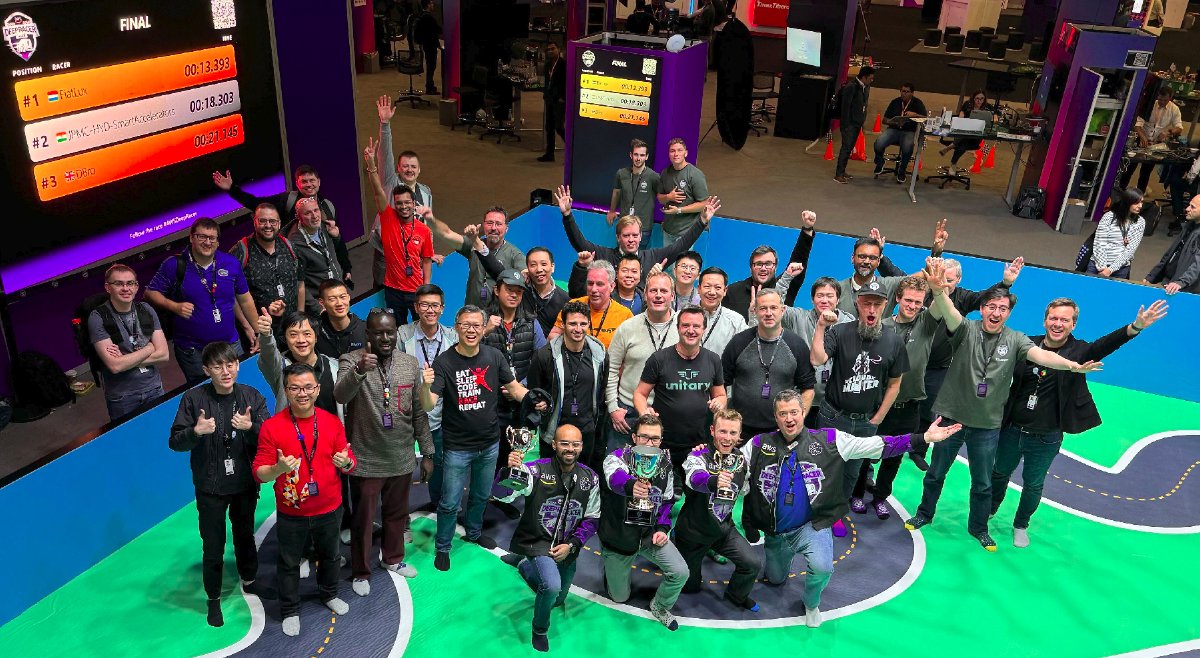
In the process of building and being part of the community I understood that my core values are curiosity and belonging, and seeing myself as the occupier of so many statistical tails (usually the ones I’d identify as the worse ones), to truly belong I have a need for others to belong. This means meeting others as they are and where they are, finding the barriers and bringing accessible paths to the other side, and oftentimes making things harder for me to make them possible for others. This is my contribution - try putting a KPI on this.
Community management is difficult
Organisations usually learn that communities can be useful. There may be one that self-started, there may be a potential for one that needs to materialise. Some sort of a community management role emerges, be it a community program manager or an advocate. They begin to engage, and the relationship grows, and the payback cycle escalates. Community programs can be created with multiple levels, and coexist.
I think the hardest and scariest part about managing and interacting with communities is that they are independent organisms that you cannot control. You won’t know who will show up and what they will contribute, or expect in return. Opening up can build a stronger connection which comes with opportunities and risks. You will struggle to put standardised impact metrics on a community. On spreadsheet community will look primarily like waste: a bunch of people spending their free time making something because they feel like it. But there will be moments, and those moments will make a difference.
You cannot hire a community nor you can fire it. All you can do is influence the conditions and nurture. And if you accept what you cannot control and are patient, the community can grow beyond it, and will show up when you need it, and surprise you with what’s possible.
Of course, you can also hurt a community - shut down the shared characteristic, or treat it badly beyond a sustainability point. Does it mean a community will end? Not really, there’s still a way forward, just a much harder one.
The dawn
AWS have let go of some of their best builders and carers who have made an impact that often goes beyond the measurable. Program managers that just were there and set the scene for community members to make great things. Developer advocates that kept shining the light on whats possible. UX researchers who, in professional terms, worked their asses off to prevent building dumb shit that adds little value and wastes time. I know many of you by name, and I am confident that you will do well, even if it is hard right now.
In the absence of data, we will always make up stories. [2]
I don’t understand why this has happened. It’s tempting to slap a “they can’t see beyond a spreadsheet” narrative. Through years I’ve learned to accept there’s usually something I do not know that may change my perspective. It doesn’t change the hurt, uncertainty or anger. But friendships will survive.
Will the communities survive without the ones we’ve lost? Yes they will. Part of the legacy they leave behind is making sure the communities outlive them whatever the circumstances. The other part is raising the successors who will step in, and be as amazing as they were. Thank you.
References
- Nino Souza Nino. People, Friends, Together. Pixabay. https://pixabay.com/photos/people-friends-together-happy-kid-4050698/
- Brené Brown (2015). Rising Strong: The Reckoning. The Rumble. The Revolution.
- . AWS DeepRacer Championships 2023: Celebrating 5 years of racing. https://blog.deepracing.io/2023/12/17/aws-deepracer-championships-2023-celebrating-5-years-of-racing/